
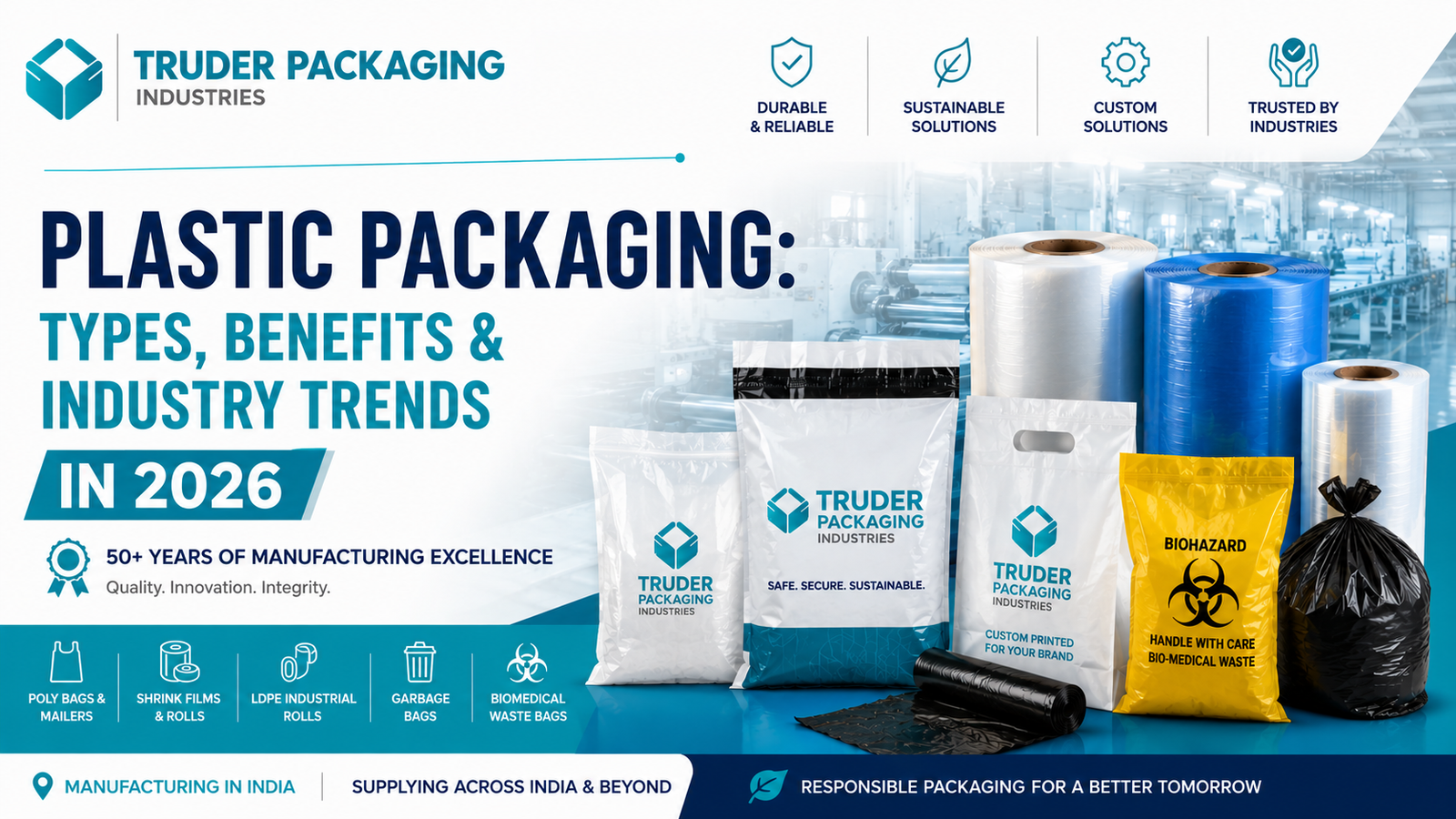
From e-commerce shipments to hospital waste disposal, plastic packaging quietly keeps products safe, hygienic, and ready for delivery every single day. At Truder Packaging, we have spent more than five decades manufacturing plastic packaging out of our Vadodara facility, supplying businesses across Gujarat and the rest of India. In this guide, we walk through what plastic packaging actually is, the main types available today, the benefits it offers manufacturers and retailers, and the trends reshaping the industry heading into 2026.
What Is Plastic Packaging?
Plastic packaging refers to any container, wrap, bag, or film made from polymer materials such as polyethylene (LDPE/HDPE), polypropylene (PP), or PET, used to protect, store, and transport goods. It ranges from simple poly bags used by neighbourhood stores to precision-engineered shrink films used on factory production lines.
Despite growing interest in paper and compostable alternatives, plastic remains the material of choice for many industries because it is lightweight, moisture-resistant, tear-resistant, and inexpensive to produce at scale.
Plastic packaging also plays a critical protective role in sectors where product integrity cannot be compromised such as pharmaceuticals, food processing, and biomedical waste handling where a torn or porous package can mean contamination, spoilage, or regulatory non-compliance.
Types of Plastic Packaging
Plastic packaging is not a single product but a family of formats, each engineered for a specific job. Below are the categories businesses rely on most:
Poly Bags
General-purpose bags used across retail, wholesale, and food packing for everyday storage and transport.
Poly Mailers / Courier Bags
Lightweight, water-resistant mailers built for e-commerce shipping, where dimensional weight and puncture resistance both matter.
Printed Liners
Used inside cartons, drums, and bins to prevent leakage and contamination, often custom-printed for brand identification.
Shrink Films and Rolls
Heat-sealed wraps that bundle, protect, and tamper-seal products for retail shelves and bulk shipments.
Garbage and Dustbin Bags
Heavy-duty bags designed for municipal, commercial, and household waste collection.
LDPE Industrial Rolls
Flexible rolls used for wrapping, lining, and covering in manufacturing and industrial settings.
Biomedical Waste Bags
Color-coded bags built to meet healthcare and hazardous-waste disposal regulations.
You can explore our full range of plastic packaging solutions to see specifications, thickness options, and customisation available for each format.
Each of these formats is manufactured to specific thickness, strength, and hygiene standards, so businesses aren't just picking a bag or film they're choosing packaging engineered for their exact product, shipping method, and industry compliance requirements. That precision is what ultimately translates into the practical benefits below.
Benefits of Plastic Packaging
Even as sustainability conversations intensify, plastic packaging continues to dominate global supply chains for good reason. Here's why businesses keep choosing it:
Resistant to moisture, tearing, and contamination, keeping products intact through handling and transit.
Lower production and shipping costs compared to glass, metal, or heavy cardboard alternatives.
Reduces overall shipment weight, cutting fuel use and freight charges especially valuable for e-commerce.
Easily printed, sized, and coloured to match branding, batch coding, or regulatory labelling needs.
From pharmaceuticals to agriculture, the same base materials adapt to countless applications.
Newer mono-material and recycled-content formats are making plastic packaging easier to recover and reuse than ever before.
Plastic Packaging Industry Trends in 2026
The plastic packaging industry is evolving quickly, shaped by regulation, e-commerce growth, and consumer demand for greener options. Here are the trends worth watching this year:
Circular Economy and PCR Materials
Post-consumer recycled content is being built into more product lines as brands respond to extended producer responsibility (EPR) rules taking effect across multiple regions.
Mono-Material Design
Manufacturers are simplifying multilayer structures into single-material films and bags so they can actually be sorted and recycled at scale.
E-Commerce-Driven Demand
Poly mailers and lightweight courier bags continue to grow as online retail expands, since they cut void space and dimensional-weight shipping costs.
Rigid Packaging Still Leads Volume
Rigid plastic formats remain the largest segment globally thanks to their durability across food, healthcare, and industrial use cases.
Regulatory Pressure and Transparency
Businesses are facing tighter labelling, recyclability, and reporting requirements, pushing packaging design decisions earlier into product development.
According to the 2026 packaging industry outlook, manufacturers are navigating this landscape alongside affordability pressures and a still-shifting tariff environment meaning packaging partners who can adapt materials and formats quickly will have a real advantage.
Choosing the Right Plastic Packaging Partner
With regulations tightening and customer expectations rising, the packaging supplier you choose matters as much as the material itself. Look for a manufacturer with proper quality certifications, in-house production (rather than a reseller), and the flexibility to customise thickness, size, and printing to your exact specifications.
Backed by five decades of manufacturing experience, our ISO-certified facility in Vadodara produces everything from poly mailers to biomedical waste bags, with the scale to handle both small orders and bulk industrial supply across India.
Conclusion
Plastic packaging isn't going away in 2026 it's getting smarter, more recyclable, and more tailored to the industries that depend on it. Whether you need everyday poly bags, custom-printed courier mailers, or compliant biomedical waste bags, choosing a reliable manufacturing partner makes all the difference to product safety and cost efficiency.
Ready to source dependable plastic packaging for your business?
Get in touch with our packaging experts for a free quote and custom recommendations.
Get a Free Quote →Frequently Asked Questions
Plastic packaging is used to protect, store, and transport goods across industries such as retail, e-commerce, food, pharmaceuticals, and industrial manufacturing, guarding products against moisture, dust, and physical damage.
The most common materials are LDPE and HDPE (used in bags, mailers, and films), polypropylene (PP), and PET, each chosen for a balance of flexibility, strength, and cost.
Many forms of plastic packaging are recyclable, and the industry is increasingly shifting toward mono-material designs and recycled content to make recovery easier, though flexible films still have lower recycling rates than rigid formats.
Rigid packaging (like containers and tubs) holds its shape and offers strong impact protection, while flexible packaging (like bags, films, and pouches) is lighter, adapts to the product shape, and typically costs less to ship.
Plastic offers superior moisture resistance, tear strength, and cost efficiency compared to paper, making it a better fit for applications where product protection or hygiene cannot be compromised.
The future points toward recycled and mono-material formats, tighter regulatory compliance, and continued growth in e-commerce-driven packaging, as manufacturers balance durability with sustainability demands.